
 "
The Wise Way to The World of Communications"
"
The Wise Way to The World of Communications"
ATM POSITIONING
|
|
|
|
|
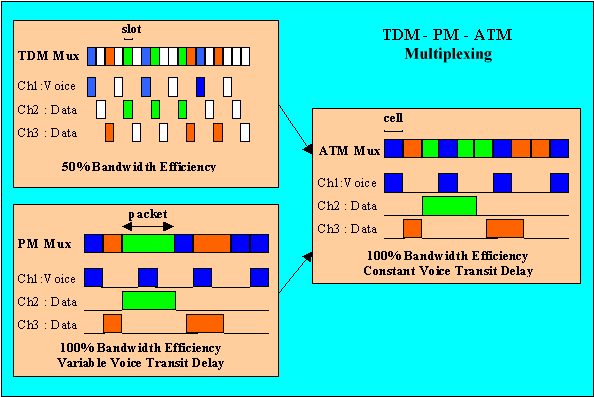
Before ATM (Asynchronous Transfer Mode) appeared, there were two different multiplexing techniques to transport several channels on the same physical links:
|
|
|
|
|||
|
|
+ Low to the high availability of the digital links. | --
Uncontrolled in case of IP & FR
. Low error rate with error recovery (X25) |
|
||
|
|
+ Low | -- High if network is loaded |
|
||
|
|
+ Extremely low | -- Uncontrolled, unpredictable |
|
||
|
|
+ Large available range: 9.6Kbps to 2.4Gbps | --Restricted in maximum speeds: 2Mbs (X25), 45Mbps (IP and FR) |
|
||
|
|
--
Low
. 64 Kbps on T1/E1 links . 2Mbps on SONET/SDH . No granularity on T3/E3 |
+ High , thanks to Asynchronous transmission: as low as 2.4 Kbps |
|
||
|
|
-- Low | + High |
|
||
|
|
--
Static connection
.No communication rerouting .Point to Point Channel |
+
Dynamic with rerouting
.Multicast channels .Point and Multipoint channels |
|
||
|
|
+ Full transparency | -- Content dependent - optimized for data applications |
|
||
|
|
+ voice, data and video services (point to point) | -- Suitable for data mainly (although voice over FR and IP exists) |
|
||
|
|
+ Channel dedicated to a single user | -- Shared between several users raising security problems |
|
||
|
|
+ Worldwide Coverage via PTT networks | -- Much less coverage even with Internet and X25 |
|
||
|
|
|
|
|